By 2026, really getting a handle on CVC (Corporate Venture Capital) is going to be a game-changer for how companies plan their investments. I mean, CVC is pretty important when it comes to shaping your overall strategy. Take a look at Cvc Lumen — they’re a great example of how businesses are diversifying their portfolios through these smart, strategic partnerships.
When it comes to investing in startups via CVC, you’ve gotta have a good eye for innovation. Risks are definitely involved, but so are some pretty exciting rewards. The market’s always shifting, so it’s not always straightforward. Companies face some tough calls — which ventures should we go after? Which ones might not pan out in the end? Looking back at past investments, both the wins and the misses, can really help steer the next move.
CVC isn’t a one-size-fits-all kind of thing — it has its quirks, and companies need to stay adaptable. Not every venture is a home run, and sometimes folks end up regretting their choices. But the more you understand how CVC works, the better you can handle those ups and downs. Building a culture that values innovation and careful analysis will be key as companies navigate this space. It’s definitely a journey, but one worth mastering."

CVC, or corporate venture capital, plays a pivotal role in financial planning. It allows firms to invest in innovative startups while gaining insights into emerging markets. In 2022, CVC investments reached $93 billion globally, showcasing its growing significance. This strategy not only diversifies portfolios but also enhances access to breakthrough technologies.
Understanding CVC is crucial for financial planners. It provides the dual benefit of financial returns and strategic advantages. A recent report indicated that over 70% of companies using CVC saw a positive impact on their core business. However, managing these investments can be complex. Not every investment yields the expected results.
Companies must grapple with numerous challenges in CVC. Aligning startup goals with corporate objectives is often difficult. The mismatched expectations can lead to underperformance. Therefore, a robust evaluation framework is needed. Investing in innovation is exciting, but it requires careful consideration. Balancing potential risks and rewards demands attention in financial planning.
This chart illustrates the projected growth of CVC investments from 2023 to 2026. These figures reflect an increasing trend in corporate venture capital activities, highlighting its importance in financial planning for businesses aiming for expansion and innovation.
In 2026, Corporate Venture Capital (CVC) is poised for significant transformation. Current trends suggest a shift toward strategic alignment with core business goals. Many companies prioritize ventures that complement their existing products and services. This alignment helps minimize risks while maximizing innovative potential.
Reports indicate that by 2026, CVC investment in technology sectors will reach unprecedented levels. Estimates suggest a growth from $67 billion in 2023 to over $100 billion. This trend reflects a keen interest in startups focusing on AI, healthcare, and sustainability. Companies aim to harness cutting-edge solutions for competitive advantages.
Tips: Diversifying your CVC portfolio can mitigate risks. Consider investing in early-stage ventures for higher returns, even if they pose challenges. Identifying synergy between investments and business strategy is crucial. Regularly evaluate the performance of your investments. This reflection ensures alignment with market trends. Embrace the evolving landscape.
In 2026, evaluating Corporate Venture Capital (CVC) performance will require clear metrics. Acute Cvc initiatives must focus on specific goals. These goals vary across industries. Understanding return on investment (ROI) is critical. However, the measurement can be murky. Many struggles to define success beyond financial metrics.
Engagement levels matter, too. Analyzing how well CVC funds foster collaboration is essential. Metrics like strategic partnerships and innovation output show broader impact. Are startups thriving? This question reflects the true value of CVC. A high number of funded startups does not guarantee success. Revisiting the goals and outcomes continuously helps businesses realign.
Another important metric is market adaptability. CVC must evolve with market changes. Assessing how quickly a fund responds to industry trends is crucial. Often, funds become stagnant. They miss opportunities in fast-paced environments. Reflecting on past decisions can reveal insights. Finding the right balance between risk and reward is a challenge that needs constant attention. Focusing on both financial returns and strategic objectives will define success in the CVC landscape.
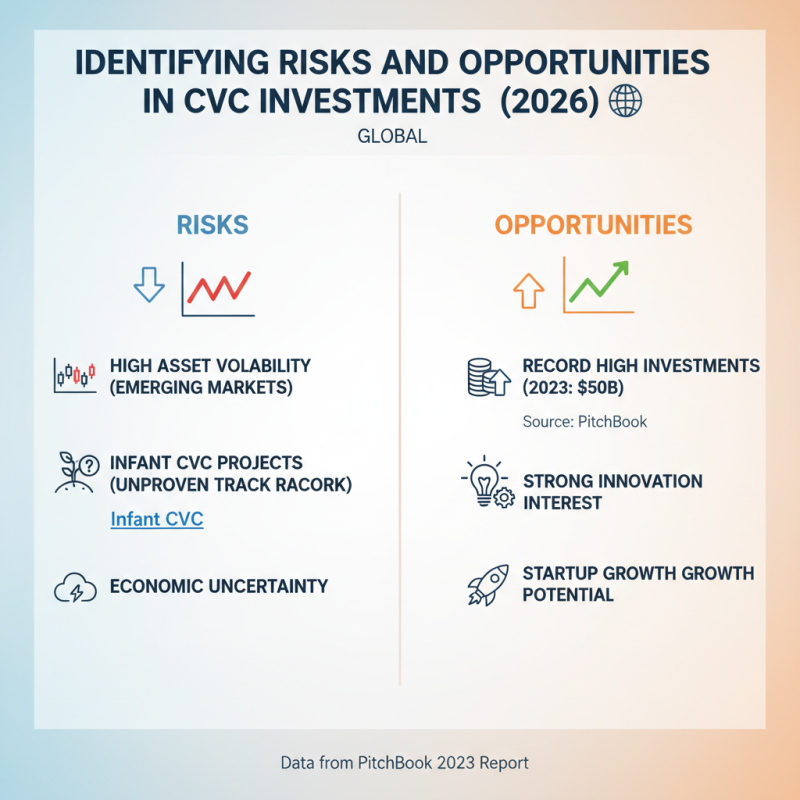
In 2026, Corporate Venture Capital (CVC) presents unique risks and opportunities. A recent report by PitchBook indicates that CVC investments reached a record high, totaling over $50 billion globally in 2023. This growth reflects a strong interest in innovation and startups. However, investors must tread carefully. High asset volatility in emerging markets creates uncertainty, especially for Infant Cvc projects that may not yet have a proven track record.
Identifying potential pitfalls is essential. Startups often face challenges like market saturation and regulatory scrutiny. A study from Preqin highlights that 62% of CVC funds report difficulties evaluating the true capability of their portfolio companies. It is crucial to perform detailed due diligence. Focus on understanding the startup's unique value proposition and underlying technology. This helps in making informed decisions about long-term viability and risk assessment.
Simultaneously, there are considerable rewards. Successful CVC investments can lead to high returns, fostering innovation within larger corporations. According to McKinsey, firms that strategically partner with innovative startups see 30% higher revenue growth than their peers. Balancing risk and reward will define CVC strategies moving forward. The potential for transformative technologies in infancy, such as artificial intelligence and biotechnology, makes this space appealing yet complex.
Corporate Venture Capital (CVC) is becoming increasingly vital. In 2026, its role in corporate growth is expected to expand dramatically. Companies look to CVC as a way to foster innovation. This approach allows enterprises to invest in startups and emerging technologies. It’s not just about funding, though. It’s about strategic partnerships and shared knowledge.
CVC can drive growth by integrating fresh ideas and talent. Many corporations find that startups offer unique solutions to existing problems. However, the integration process is not always smooth. Companies often struggle with aligning corporate objectives with startup cultures. This friction can lead to misunderstandings and missed opportunities. Firms need to reflect on how to better manage these relationships.
Embracing CVC requires a shift in mindset. Companies must be open to learning from their partners. Some executives express skepticism about this approach. Investing without a clear strategy may lead to financial loss. Balancing risk and innovation is crucial. As we move towards 2026, it’s essential for firms to rethink their CVC strategies.
Integrating Corporate Venture Capital (CVC) into financial strategies can be challenging. Cuffed Cvc initiatives are becoming essential for companies aiming for growth. These initiatives often involve collaborating with startups to identify new market opportunities. However, aligning them with a company’s core financial strategy requires careful planning.
When integrating CVC, understanding the risk-reward balance is crucial. Companies might invest heavily to innovate but face unexpected setbacks. Tracking success metrics can feel overwhelming. It's necessary to evaluate both financial and strategic goals. Adjusting investment levels based on evolving objectives may also be wise. Misalignments can create issues. Regular feedback loops can be beneficial.
Learning from failed investments is as important as celebrating successes. Many firms rush into partnerships without clear goals. Taking time to assess and understand the market landscape can yield better results. Investing in knowledge about potential partners is essential. This thoughtful approach can lead to more fruitful collaborations, making Cuffed Cvc a beneficial part of financial planning.
The evolution of Corporate Venture Capital (CVC) is transforming the financial landscape. In 2026, companies are integrating Cvc Access more strategically. This shift allows businesses to tap into emerging startups. By doing so, they gain insights into innovative technologies and market trends. The partnership between large firms and startups is becoming essential for growth.
Moreover, we see an increase in diverse investment strategies. Companies are no longer only focusing on direct financial returns. Many are prioritizing strategic alignment and collaborative opportunities. This new perspective brings challenges; not every investment will yield desired outcomes. Companies may struggle to identify the right startups or align visions effectively.
Some firms are missing the mark with their CVC approaches. They often set unrealistic expectations and overlook the importance of nurturing relationships. Patience is crucial; building trust takes time. In this fast-paced world, taking a step back may provide clearer insights. The future of CVC hinges on adaptability and a willingness to rethink traditional methodologies.
: CVC is a strategy where companies invest in innovative startups to gain insights and financial returns.
CVC diversifies portfolios and enhances access to breakthrough technologies, which are vital for growth.
Over 70% of companies report a positive impact on their core business from CVC investments.
Aligning startup goals with corporate objectives can be difficult, leading to mismatched expectations.
Companies need clear metrics, including ROI and engagement levels, to assess CVC's impact on their goals.
No, many funded startups do not thrive. Continuous evaluation is necessary to ensure alignment with goals.
Market adaptability is crucial. Funds often falter when they fail to respond quickly to industry trends.
Success can be complex. It requires looking beyond financial metrics and considering innovation and collaboration.
Companies should regularly revisit their past decisions and outcomes to improve future investments.
Focusing solely on financial returns without balancing strategic objectives can lead to underperformance.
The article "How to Understand CVC in 2026 Financial Planning?" provides a comprehensive overview of Corporate Venture Capital (CVC) and its growing significance in the financial landscape. It defines CVC and outlines its importance in fostering innovation and growth within corporations. The piece discusses current trends expected by 2026, emphasizing metrics for evaluating CVC performance and identifying inherent risks and opportunities within CVC investments.
In addition, the article highlights the strategic role of CVC in corporate development, underscoring best practices for effectively integrating CVC into comprehensive financial strategies. Finally, it presents a future outlook on the evolution of CVC, projecting its continued impact on financial planning and corporate finance as organizations adapt to an ever-changing market environment.